
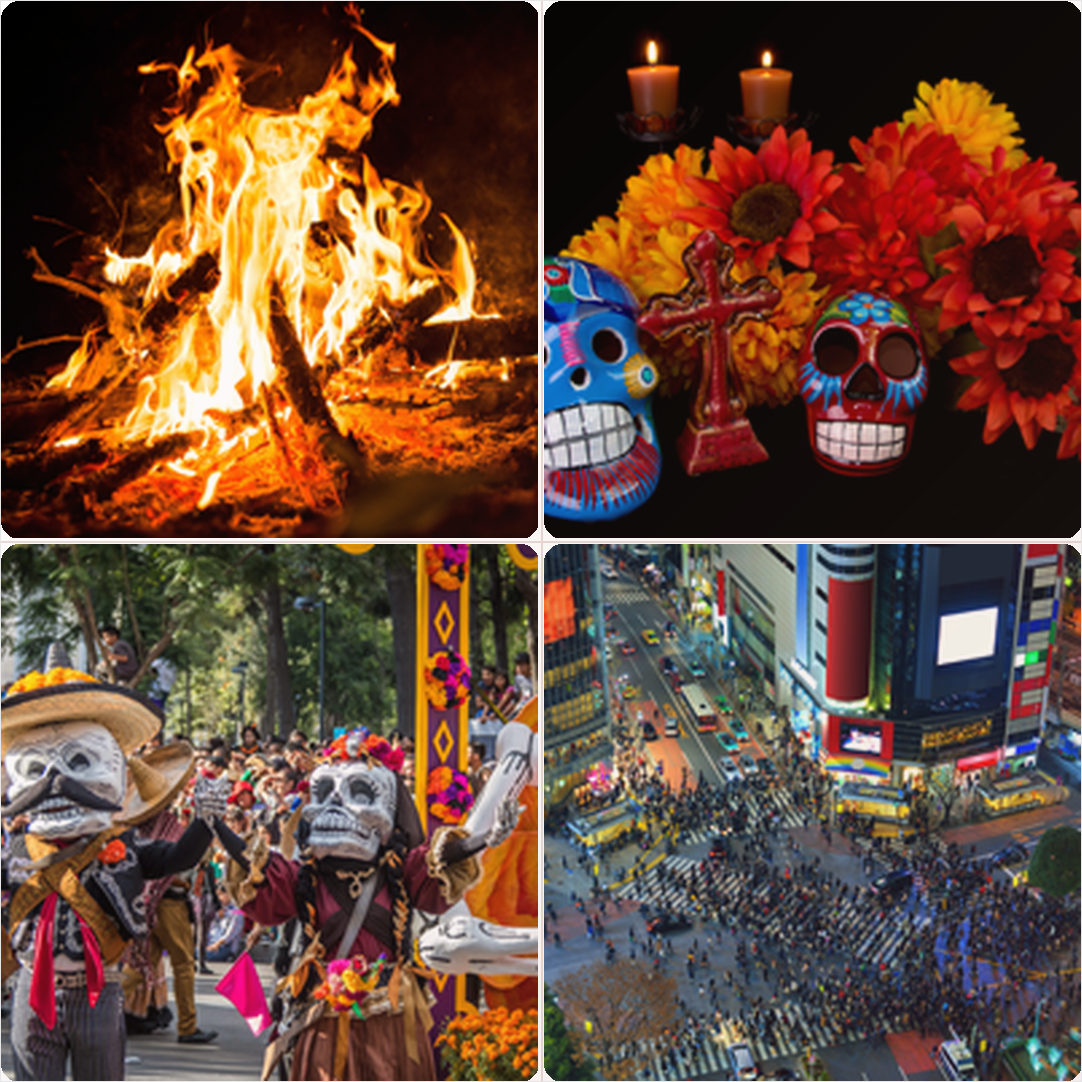
Halloween Around the World traces how one ancient festival evolved across centuries and continents. What began over 2,000 years ago as Samhain in Celtic Europe — a time to mark the end of harvest and honor ancestors — has transformed into a global celebration of creativity, community, and remembrance. From the solemn reflection of Mexico’s Día de los Muertos to Japan’s modern-day street parades and cosplay events, Halloween continues to adapt while keeping its spirit of connection alive.
🎃 Origins & Tradition – The Roots of Halloween
From Samhain to Halloween
More than 2,000 years ago, the Celts of Ireland and Scotland celebrated Samhain, marking the end of harvest and the beginning of winter — a season associated with both death and renewal. It was believed that during this time, the veil between the living and the dead grew thin. People lit bonfires, wore costumes to disguise themselves from wandering spirits, and offered food to honor ancestors.
As Christianity spread, the festival blended with All Hallows’ Eve — the night before All Saints’ Day — merging pagan ritual with Christian observance. Over centuries, the combination of Celtic, Roman, and Christian traditions evolved into what we now call Halloween.
By the 19th century, Irish and Scottish immigrants carried these customs to North America, where Halloween took on a new life. Pumpkins replaced turnips as lanterns, costumes became playful, and community gatherings transformed the observance into a celebration of creativity and connection.
🌀 Continuity & Remembrance – Honoring What Endures
Traditions of Memory and Meaning
Across centuries, many cultures have marked this time of year as one of remembrance — a moment to pause between seasons, to honor those who came before, and to reflect on the cycle of life and renewal. While Halloween evolved into a celebration of community and creativity, its spirit of remembrance continues to echo through global observances.
In Mexico, Día de los Muertos (Day of the Dead) blends ancient Aztec rituals with Catholic tradition, transforming remembrance into a vivid expression of love. Families build altars adorned with flowers, candles, and favorite foods to welcome spirits home — not in fear, but in joy. In Japan, the Obon festival carries similar themes of reunion and respect, symbolized by lanterns that guide ancestors back to the spirit world.
These traditions remind us that remembrance is not about loss, but connection — the enduring bond between generations and the stories that keep them alive.
🔮 Transformation & Reinvention – From Ritual to Celebration
Shifting from Sacred to Social
Over time, Halloween transformed from a sacred observance into a social celebration — a shift that mirrors the evolution of many traditions as they cross borders. What began as a ritual of harvest and remembrance became a creative outlet for expression and play.
In Europe and North America, 19th-century communities reimagined Halloween as a night of costumes, games, and neighborhood gatherings. The festival’s meaning broadened — less about spirits, more about imagination, community, and delight in the unexpected.
That reinvention is what allows Halloween to thrive today: a reminder that culture is never static but continually reshaped by the people who live it.
🌏 Modern Adaptation & Globalization – A Worldwide Celebration
From Local Custom to Global Phenomenon
As cultures intertwine, Halloween has found new life far from its Celtic roots. In Japan, extravagant street parades and cosplay events — from Shibuya to Tokyo Disneyland — have turned October into a month-long celebration of imagination and community spirit. In Singapore, malls and restaurants host themed events that blend global trends with local flair.
Elsewhere, France and Germany mark Halloween with costume parties, concerts, and family events that reflect both curiosity and adaptation. Across Latin America, Halloween often coexists with deeply spiritual observances like Día de los Muertos, creating a dialogue between imported festivity and local heritage.
In its global journey, Halloween has become more than a single night — it’s a shared moment of creativity, connection, and respect for the past that continues to evolve across the world.
Across centuries and continents, Halloween’s evolution reminds us that traditions endure not because they stay the same — but because they adapt, inviting new generations to celebrate in ways that reflect their own culture and creativity.
Contact us today to explore how our training and coaching solutions can equip your team to succeed — whether you're tackling global initiatives or navigating complex cross-cultural challenges. We welcome the opportunity to support your goals — across cultures, across borders, and across the global landscape.
Home | Services | Culture | Insights | About Us | Work with Us | Contact
Email Us | www.culturalsavvy.com | ©1999–2025 Cultural Savvy. All Rights Reserved. Terms of Use